Storm Shelter Requirements for Alabama Homeowners

Alabama Storm Shelter Requirements: What Homeowners Need to Know
If you live in Alabama, you know how quickly tornado season can turn from calm to chaotic. In a matter of minutes, severe weather alerts can light up your phone and leave your family searching for a safe place to take shelter. With storms this unpredictable, many homeowners wonder what storm shelter requirements they should follow to keep their families protected.
Although Alabama does not have a statewide law requiring private storm shelters, there are important safety standards, design specifications, and federal guidelines that every homeowner should understand before installing one. Some rules affect shelter placement, others influence construction, and many reference FEMA safe room requirements that have been tested to withstand EF5 tornadoes. Falling short of these requirements can lead to unsafe installations, compliance problems, or shelters that fail under extreme wind pressure.
By the end of this guide, you will know exactly what Alabama homeowners should consider, from shelter size and materials to installation rules, ventilation needs, and verified FEMA compliance. You will also see real examples to help you choose the best design for your home and budget.
Understanding Essential Storm Shelter Requirements for Alabama Homeowners
Storm shelter requirements in Alabama draw from three primary sources: FEMA guidelines, ICC building codes, and local county or city recommendations. While the state lacks a uniform mandate for residential shelters, nationally recognized standards exist to ensure that tornado shelters can survive extreme forces.
The goal of these requirements is to create a protective structure capable of withstanding:
- High impact loads from EF4 and EF5 tornadoes
- Flying debris traveling over 200 mph
- Severe uplift and lateral wind pressure
- Structural collapse from extreme storm events
Many homeowners assume any underground bunker or steel box qualifies as a safe room. This is one of the most common misconceptions. Only shelters that meet FEMA tornado shelter guidelines or ICC 500 standards are considered verified safe rooms. These safety benchmarks cover everything from material strength to anchoring systems, door impact ratings, and ventilation design.
Understanding these baseline requirements is the first step toward installing a safe, compliant shelter. Next, you must ensure proper placement and installation practices that account for Alabama’s soil conditions, drainage challenges, and varying yard layouts.
Meeting All Key Storm Shelter Requirements for Alabama Homeowners
Below are the most important requirements homeowners should follow when building or installing a storm shelter.
Knowing Essential Shelter Construction Specifications
Construction specifications form the backbone of safe room requirements. Whether you are installing an above ground shelter or looking into underground storm shelters, these specifications determine how well your shelter resists extreme tornado forces.
FEMA P 361 and ICC 500 standards outline requirements for:
- Structural reinforcement
- Steel and concrete thickness
- Missile impact resistance
- Anchoring and connection methods
- Wind load capacity up to 250 mph
Concrete and steel are the most commonly used materials because they perform best under extreme pressure. Reinforced storm doors with multi point locks are non negotiable. Anchoring must also be performed by certified professionals, since improper anchoring can cause shelters to shift or detach during a tornado.
Understanding these construction guidelines helps homeowners avoid shortcuts that compromise safety.
Choosing Safe Shelter Placement Locations
Placement is a major consideration when meeting tornado shelter requirements. Alabama’s varied terrain includes clay soil, sloped yards, and flood prone areas, all of which influence where a shelter can safely go.
Key placement recommendations include:
- Installing underground shelters on elevated ground to avoid flooding
- Avoiding low lying areas with standing water
- Choosing interior installations such as garages or basements when possible
- Ensuring fast and safe access during an emergency
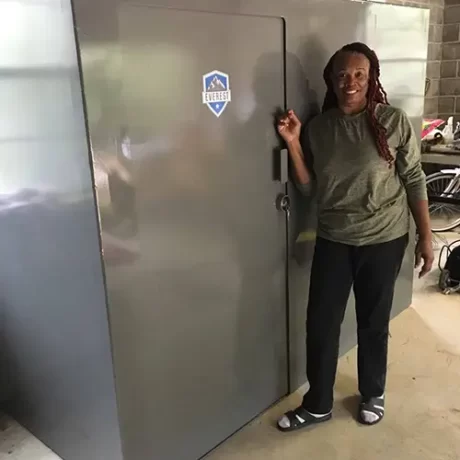
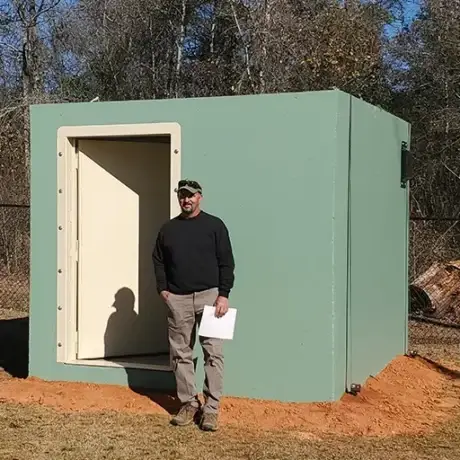
For homeowners comparing different types of storm shelters, helpful examples can be found in options such as safe rooms, above ground shelters, and underground shelter designs.
Smart placement increases both comfort and safety during severe storms.
Following Verified Door and Ventilation Requirements
A shelter is only as strong as its door. FEMA rated doors undergo intense testing to simulate impacts equivalent to debris thrown at tornado level speeds. Standard steel or residential doors do not meet these requirements and fail easily during high winds.
Ventilation is equally critical. Safe rooms must have at least two protected vents to maintain airflow and prevent heat buildup inside the shelter. Vent positioning should allow airflow without letting water, debris, or insects enter.
When evaluating models, you can compare impact rated doors and vented systems through examples such as the unpainted concrete above ground shelter.
Ensuring Proper Size and Occupancy Capacity
Shelters must provide enough space for all intended occupants. FEMA suggests allocating at least three square feet per adult, with additional space for individuals with mobility needs or families with children and pets.
Determining shelter size early helps balance budget and safety requirements. To explore larger options or community sized shelters, review the available community shelter models that serve groups rather than single households.
Applying Storm Shelter Requirements in Real Alabama Settings
Seeing real world applications makes it easier to understand how requirements translate into safer shelters for Alabama homeowners.
Example 1: Underground Shelter in a Rural Area
A family in rural Tallapoosa County installs an underground unit on high ground to avoid flooding. The homeowner follows FEMA and ICC standards, reinforces the concrete walls, and uses a certified storm door. Careful placement and proper installation ensure long term durability and reduced water intrusion risk. To see an example of similar installations, review this Alabama focused guide on underground storm shelter placement.
Example 2: Above Ground Safe Room in a Flood Prone Neighborhood
A Montgomery homeowner chooses an above ground storm shelter because groundwater levels make in ground units more vulnerable. Anchored inside a garage, the safe room meets FEMA and ICC criteria while offering fast access during warnings.
Example 3: Multi Person Safe Rooms for Larger Households
Families with six to twelve members often design shelters spacious enough for long durations. Some add ventilated climate control features or wider doorways for accessibility. These design choices remain compliant while improving comfort.
Avoiding Mistakes While Meeting Storm Shelter Requirements
Understanding common mistakes helps homeowners install safer, more reliable shelters.
- Using non rated materials: Doors and walls must be tested. Standard doors fail impact tests.
- Ignoring drainage and soil conditions: Underground units can flood without proper drainage and elevation planning.
- Skipping anchor requirements: A shelter is only safe if securely anchored to its base.
- Underestimating size needs: Families often outgrow small shelters. Plan ahead for comfort and safety.
- Hiring non certified installers: Work with experienced professionals who understand FEMA and ICC specifications.
Avoiding these mistakes ensures your investment performs reliably during severe weather.
Final Thoughts on Alabama Storm Shelter Requirements
Understanding storm shelter requirements helps Alabama homeowners build or install shelters that offer genuine protection. By following FEMA and ICC guidelines, selecting appropriate materials, and ensuring proper placement and anchoring, you greatly increase your shelter’s ability to withstand tornado force winds.
Use what you have learned to plan confidently and make decisions that prioritize safety and long term durability. You can begin exploring secure options by reviewing different shelter types such as safe rooms, above ground models, and underground shelters that meet Alabama’s storm readiness needs.
For official safety guidance, refer to statewide emergency information at Alabama.gov and national preparedness recommendations at FEMA.gov.
Frequently Asked Questions About Storm Shelter Requirements
Is a storm shelter required by law for Alabama homeowners?
No. Private storm shelters are not legally required in Alabama. However, FEMA and ICC safety standards provide essential guidance for building safe and durable shelters.
How do I know if a storm shelter meets FEMA or ICC standards?
Look for engineering documentation, certification labels, or verification from reputable manufacturers. Compliance with FEMA P 361 or ICC 500 ensures the shelter passed structural and debris impact testing.
Can I put a storm shelter in my garage?
Yes. Many above ground safe rooms installed in garages meet all necessary anchoring and reinforcement standards. This option is common in areas where underground shelters are more likely to flood.
What size storm shelter should my family have?
FEMA recommends at least three square feet per adult, with more required for children, pets, and mobility devices. Families with larger households should choose a shelter designed for six to twelve occupants.
Do underground storm shelters flood in Alabama?
They can. High groundwater levels and clay soil increase the risk. Proper drainage, elevated site placement, and waterproof construction help reduce flooding risks.